Furnace Oil, Natural Gas or Electric? Choosing the Heating System for Hot Dip Galvanizing Equipment
The heating system is where most galvanizing projects are won or lost. It sets the kettle's service life, the fuel bill for the next fifteen years, and whether the plant can be permitted at all. This comparison covers the three options Xinlingyu engineers most often specify, using the performance envelope of a delivered 20,000 ton per year line as the reference point.
What All Three Options Must Deliver
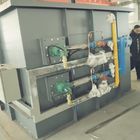
Regardless of fuel, the zinc bath must hold 435–450 °C with a tolerance of ±2 °C, the furnace must never exceed 650 °C, and wall temperature must stay under 50 °C. Miss those numbers and the kettle erodes faster than any savings can compensate. The reference burner configuration for a 7.0 × 1.2 × 2.2 m kettle is two 450 kW units firing at 30 kg/hour combined, with full-power heat-up of 60–200 °C/h adjustable to a set curve.
| Criterion | Furnace Oil | Natural Gas | Electric |
|---|
| Capital cost | Lowest | Low to medium | Highest |
| Fuel / energy price stability | Volatile, region-dependent | Most stable where piped supply exists | Stable, tariff-driven |
| Temperature control | ±2 °C with pulse firing | ±2 °C with pulse firing | ±1 °C, fastest response |
| On-site storage | Oil tank, heating, pumping skid | Pipeline only | Substation capacity |
| Flue gas and stack | Yes — stack and heat recovery required | Yes — stack and heat recovery required | None |
| Emission profile | Highest — SOx, NOx, particulates | Moderate — NOx only | Zero on site |
| Best fit | Remote sites, weak grid, low gas availability | Industrial parks with piped gas | Tight air permits, high power reliability |
Furnace Oil: Lowest Entry Cost, Highest Operating Discipline
Furnace oil remains the choice where natural gas is unavailable and the grid cannot carry a large electric load. It needs a storage tank, fuel heating and pumping, and a combustion air system — plus a stack. The upside is that flue gas is a usable resource: on the reference line, exhaust is routed through a titanium-tube exchanger that keeps the flux bath at 60–70 °C automatically, and preheating combustion air with exhaust cuts fuel consumption by roughly 10%. That recovery loop is what keeps an oil-fired plant economically competitive.
Natural Gas: The Default for Industrial Parks
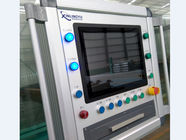
Where a pipeline exists, gas usually wins on total cost of ownership. There is no storage, no fuel heating, no pumping, and the burner train is simpler to maintain. Emissions are limited to NOx, which makes the air permit materially easier than oil. Control accuracy is identical to oil — ±2 °C — because it comes from the pulse-firing strategy and the PLC loop, not from the fuel itself. Dual K-type thermocouples read furnace zone and liquid zinc, and the controller corrects the set point as the bath approaches target.
Electric: Cleanest on Site, Heaviest on Grid
Electric heating removes the stack, the fuel handling and all on-site combustion emissions, which can be decisive in jurisdictions where a new stack is effectively unpermittable. The trade-offs are capital cost and electrical capacity: the reference line already draws 230 kW for the total equipment set, and electric kettle heating adds a large continuous load on top. Electric suits plants with reliable, competitively priced power and strict local air rules.
How to Decide in One Meeting
- Is gas piped to the boundary? If yes, gas is usually the answer.
- Is the site remote with a weak grid? Furnace oil with waste heat recovery is the pragmatic choice.
- Is the air permit the binding constraint? Electric removes the stack entirely.
- What is your annual tonnage? Fuel choice scales with it — a 20,000 t/year line amplifies every 10% of efficiency.
- What maintenance resource do you have? Oil needs fuel-system care; gas needs burner tuning; electric needs almost none.
Xinlingyu supplies burner sets for furnace oil, natural gas and LPG on the same kettle and control platform, so the decision can be made on your utility reality rather than on supplier capability. Send your site utility conditions and target tonnage for a heating comparison against your actual fuel prices.


 আপনার বার্তাটি 20-3,000 টির মধ্যে হতে হবে!